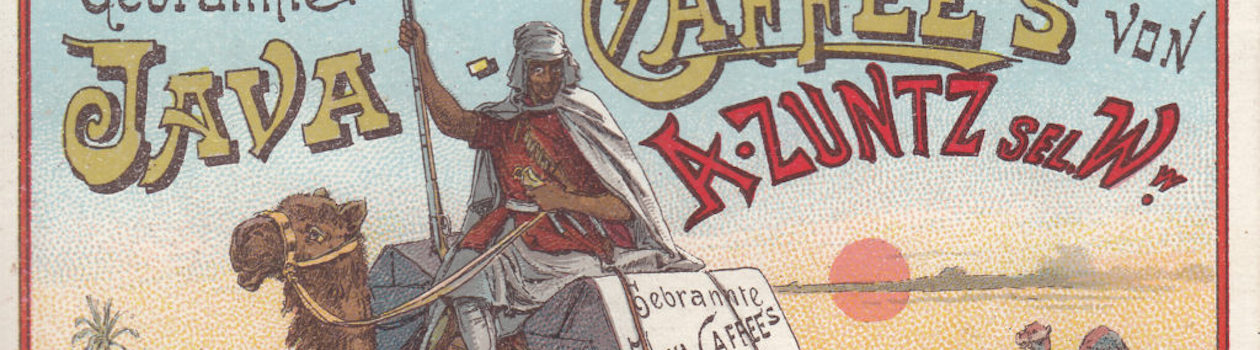
From the late 1800s to early 1900s, the mass production of consumer goods and the public’s fascination with Egypt converged to reshape Western marketing.
At the same time, the development of lithographic printing in the 1870s allowed companies to print eye-catching color advertisements cheaply. Manufacturers used trade cards and other promotional materials to charm potential buyers and set themselves apart from their competition.
European and American businesses enhanced their products’ desirability with popular imagery of pyramids, sphinxes, and pharaohs. From candy to medicine and household items, advertisements harnessed Egypt’s association with luxury and ancient knowledge to lend an aura of exotic decadence and antique authority to commodities. In so doing, they created a one-note Western fantasy of Egypt, reducing a complex culture to visual enticement.
-
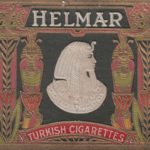
- Helmar Turkish Cigarette Box, c. early 1900s, S. Anargyros Famous Cigarettes, New York, NY, Bequest of Judge John Webb and Ellen McClung Green, 1957.3.398.6.
-
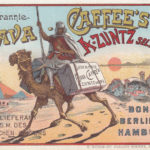
- Java Coffee Trade Card, c. 1890, Printed by C. Busch Du Fallois Soehne for A. Zuntz sel Wwe, Crefeld, Germany, Gift of Elaine Altman Evans, 2009.15.1.
-
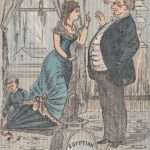
- Egyptian Tenexine Glue Trade Card, c. 1890–1900, Tenexine Company, Boston, MA, Gift of Elaine Altman Evans, 2007.33.1.
Curated by Melinda Kay Narro, Curatorial Assistant.