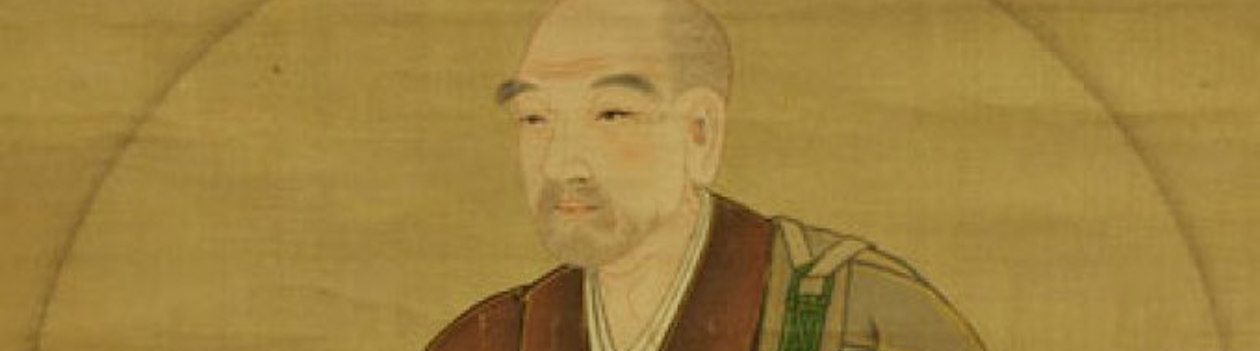
Zen art is known for its elegant simplicity, embodied in the many paintings and calligraphies in this exhibit that consist of black ink on white paper or silk. With a few brushstrokes, Zen monks create expressions of enlightenment, from a simple circle to an image of Zen’s Indian founder Bodhidharma.
These works from the Kagetsu An Collection show a wide range of Zen art from Japan’s Edo period (1600–1868) to the twentieth century, as well as Zen tea ceremony objects.
Zen is one of many schools of Buddhism, a religion based on the teachings attributed to Siddhartha Gautama, who is commonly known as the Buddha. The Buddha lived and taught in India sometime between the sixth and fourth centuries BC. Buddhists recognize him as an awakened or enlightened teacher who ultimately attained nirvana and shared his insights. “Zen” is the Japanese pronunciation of the Chinese character “Chan,” which is the Chinese rendering of the Sanskrit word dhyana that refers to a mind absorbed in meditation. Seated meditation, or zazan, is the core practice of Zen.
Japanese Buddhists embraced Zen in the twelfth century, and it became one of the dominant forms of Buddhism there. Zen art expresses the enlightened mind that, according to Zen doctrine, exists within everyone. The only difference between buddhas and other people is that buddhas have awakened to their innate enlightenment, and other people have not.
Painting, calligraphy, and the tea ceremony all served can be forms of meditation, and can serve as objects of meditation after they are done. A phrase such as “ordinary mind is the Way,” a lotus pond, or the peak of Mt. Fuji could be the catalyst that leads the viewer to realize his or her innate enlightenment. The search for enlightenment need not extend beyond one’s own mind.
Curated by and on loan from: John Fong
Associate Curator: Megan Bryson, UT Department of Religious Studies
Collaborator: Suzanne Wright, UT Department of Art
Tea ceremony set loaned by: Morikami Museum and Japanese Gardens, Delray Beach, Florida
Sponsors: Aletha and Clayton Brodine Museum Fund; Arts and Heritage Fund, Knoxville, Tennessee; UT Ready for the World Initiative